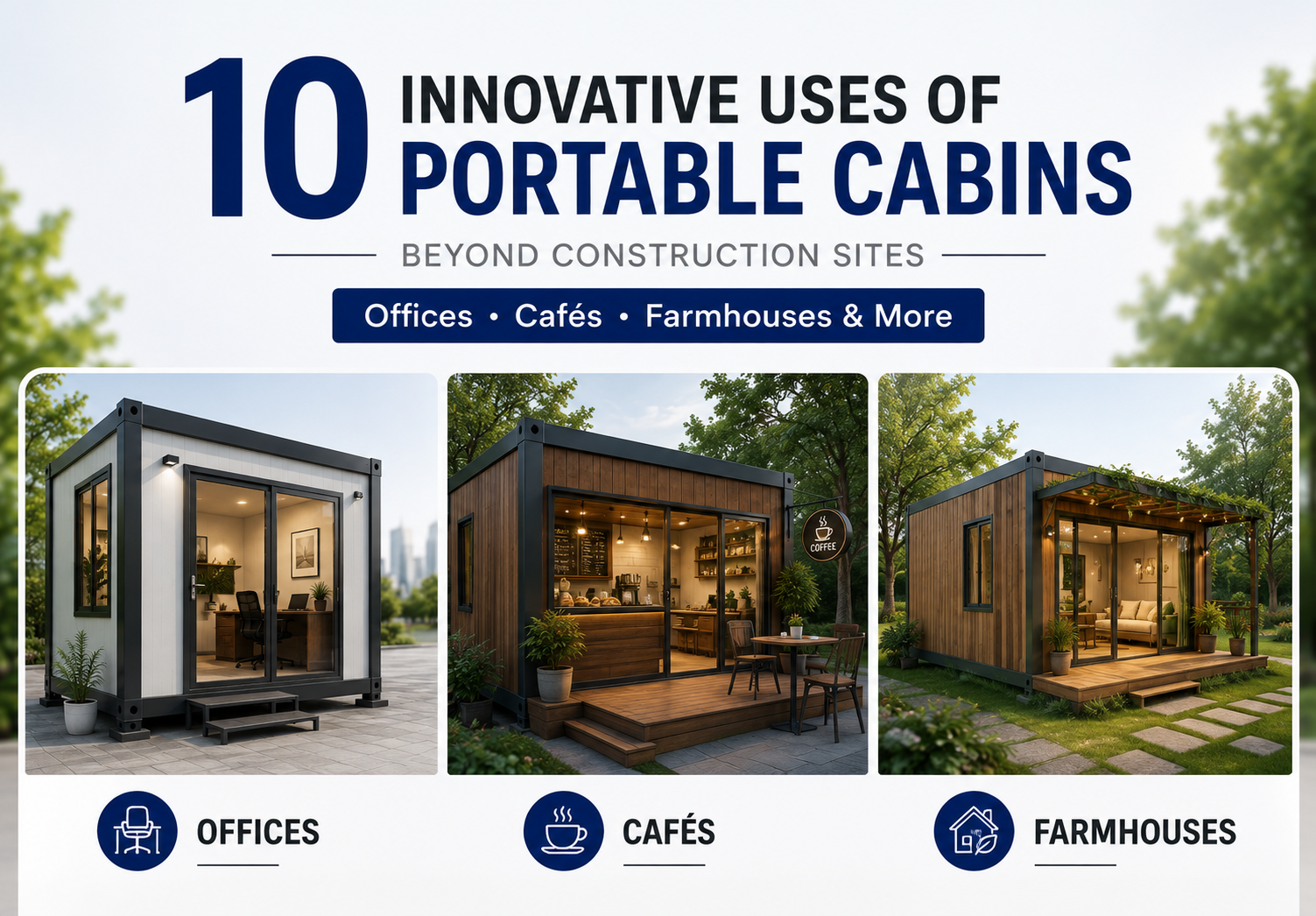
When most people hear the words “portable cabin,” they immediately think of a construction site.
A site office.
A security cabin.
It could be a temporary accommodation unit.
But that picture is changing.
Modern portable cabins have evolved far beyond the traditional “site cabin.” With better insulation, modular construction, electrical systems, contemporary finishes, and flexible layouts, they can be designed for a wide range of business, residential, and lifestyle applications. PortaSpaze’s own current Kolkata guide highlights applications ranging from offices and classrooms to retail, healthcare, guest rooms, home offices, studios, rooftops, and farmhouses. (PortaSpaze)
And that raises a much bigger question:
What else can you do with a portable cabin?
The answer is “quite a lot.”
Portable spaces can provide usable infrastructure for a variety of needs, including a compact home office in your garden, a stylish farmhouse retreat, a rooftop room, a pop-up café, or a professional sales office, without the need to commit to conventional construction.
In this article, we explore 10 innovative uses of portable cabins beyond construction sites and why this flexible approach to space is becoming increasingly relevant for businesses, developers, and homeowners.
What Is a Portable Cabin?
A portable cabin is a prefabricated or modular structure designed to provide usable enclosed space while offering greater flexibility than conventional fixed construction.
Depending on the system and specification, a portable cabin can include the following:
- Insulated walls
- Roofing system
- Flooring
- Doors and windows
- Electrical wiring
- Lighting
- Air-conditioning provisions
- Plumbing
- Internal partitions
- Furniture
- Custom finishes
Modern portable cabins can therefore function as much more than temporary shelters.
They can become purpose-designed spaces for work, business, hospitality, retail, accommodation, and everyday living.
The important distinction is that “portable” describes the flexibility of the structure, not the quality of the space.
A well-designed portable cabin can look and feel like a proper room or workspace rather than a temporary shed.
Why Are Portable Cabins Becoming More Versatile?
There are three major reasons.
1. Faster Space Creation
Traditional construction can involve:
Planning → Foundation → Masonry → Roofing → Electrical → Plumbing → Flooring → Finishing
A modular solution can shift much of the fabrication away from the final site, potentially reducing on-site construction activity.
2. Flexibility
A portable structure can potentially be
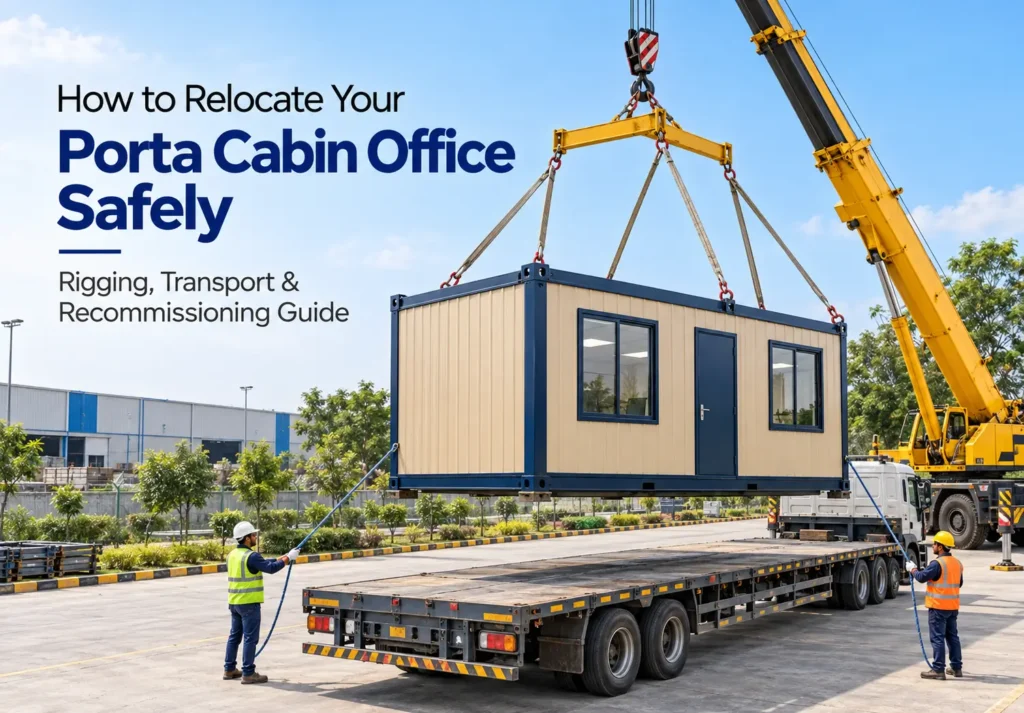
- Relocated
- Reconfigured
- Expanded
- Reused
- Repurposed
depending on its design.
3. Changing Space Requirements
Businesses and homeowners may not always need the same amount of space over time.
A company may need an office today.
A retailer may need a pop-up outlet for six months.
A homeowner may need a guest room.
A developer may need a sales office during a project and a different facility afterwards.
Portable infrastructure allows the space to adapt to the requirement.
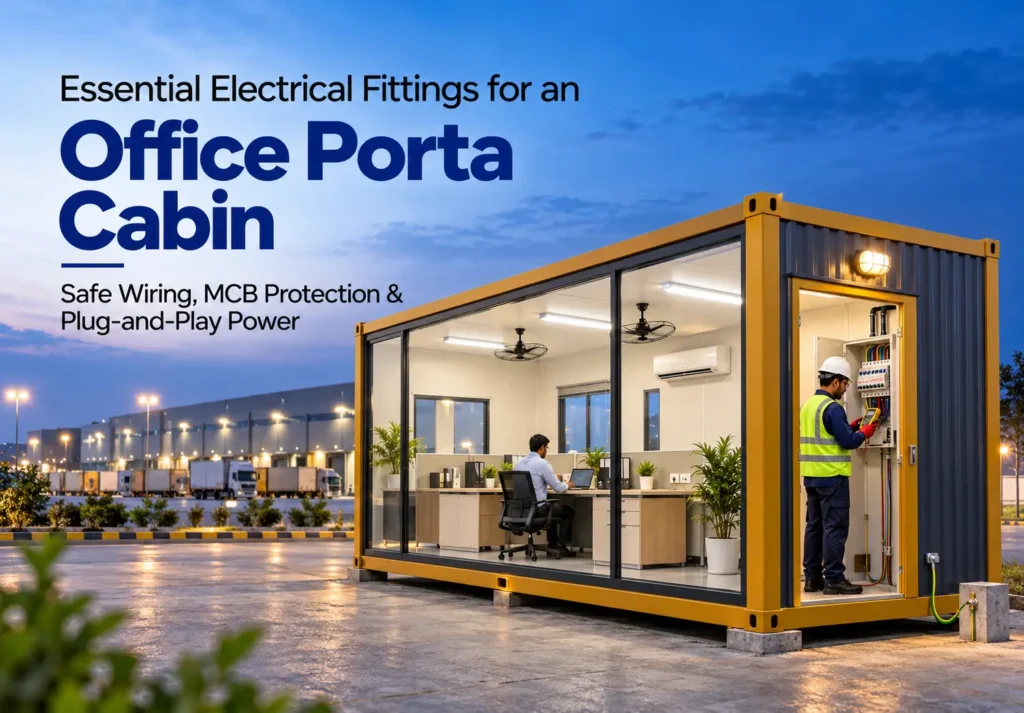
1. Portable Office for Businesses
Let’s start with one of the most practical uses.
A portable office.
Not every business has the time, budget, or space to construct a permanent office.
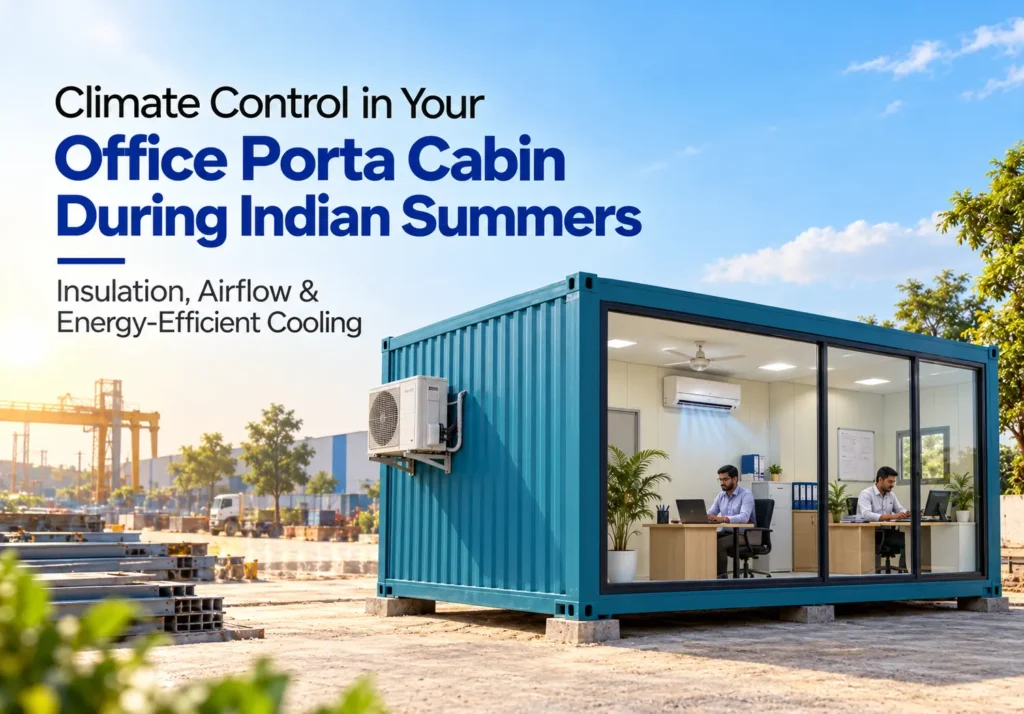
A portable cabin can create a dedicated workspace relatively quickly, depending on the specification and installation requirements.
It can be used as:
- Small business office
- Branch office
- Administrative office
- Remote office
- Back-office workspace
- Manager’s cabin
- Meeting room
- Training room
- Reception
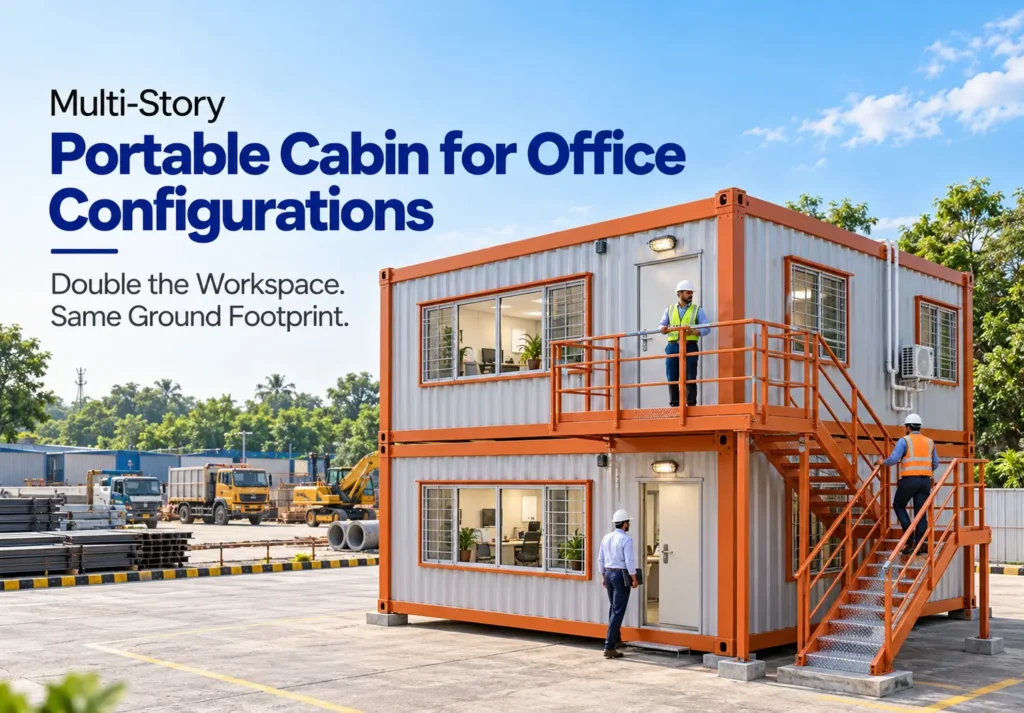
A portable office can also be placed within a larger industrial, warehouse, or commercial property where additional administrative space is needed.
Example
Imagine a warehouse operator who needs a 150–300 sq ft office inside the facility.
A purpose-built modular office can create the required space with less disruption, avoiding the need for extensive civil construction inside an operating warehouse. warehouse. A purpose-built modular office can create the required space with less disruption, avoiding the need for extensive civil construction inside an operating warehouse. Instead of undertaking extensive civil construction inside an operating warehouse, a purpose-built modular office can create the required space with less disruption.
This makes portable cabins particularly useful in situations where operations need to continue while we create additional space.
2. Portable Café or Coffee Shop
This is where portable cabins become much more interesting.
A cabin can be transformed into a compact café, coffee shop, or food-service outlet, subject to applicable local permissions, utility requirements, and food-safety regulations.
Think:
Small footprint + recognizable design + quick setup + flexible location.
A portable café can work for
- Resorts
- Campuses
- Corporate parks
- Events
- Farmhouses
- Tourist destinations
- Residential communities
- Highway locations
- Commercial developments
- Temporary events
The cabin can house:
- Counter
- Kitchen/preparation area
- Storage
- POS system
- Electrical equipment
- Service window
- Branding
- Customer-facing façade
The external area can then be used for:
- Outdoor seating
- Planters
- Decking
- Umbrellas
- Lighting
The result doesn’t have to look like a “cabin.”
It can look like a designed café experience.
3. Farmhouse Retreat
One of the most exciting applications is the farmhouse cabin.
You don’t necessarily need to build a large conventional structure to create a comfortable weekend retreat.
A thoughtfully designed cabin can provide the following:
- Bedroom
- Living area
- Bathroom
- Pantry
- Large windows
- Deck
- Outdoor seating
- Storage
Imagine a cabin surrounded by:
🌿 Trees
🌿 A small garden
🌿 Outdoor seating
🌿 Soft lighting
🌿 A landscaped pathway
The cabin becomes less about construction and more about experience.
forThis model is particularly attractive for:
- Farm owners
- Weekend-home owners
- Hospitality businesses
- Resorts
- Eco-retreats
- Private estates
4. Rooftop Room or Terrace Pod
Urban properties often have one underused asset:
The rooftop.
Instead of leaving the terrace empty, a thoughtfully designed modular space can potentially transform it into an additional usable area—subject to structural feasibility and applicable permissions.
Possible uses include:
Home Office
A quiet workspace away from the main house.
Hobby Room
For painting, music, photography, or crafts.
Reading Room
A peaceful private retreat.
Guest Room
Additional accommodation for visitors.
Studio
forThis lounge is forforThis lounge is forFor creators, designers, or freelancers.
Lounge
A private rooftop relaxation space.
Small Fitness Room
A dedicated workout area.
This concept is often referred to as a terrace pod, rooftop cabin, or rooftop room.
But there is one important caveat:
A portable cabin should never simply be placed on a rooftop without checking structural capacity, waterproofing, access, fire-safety considerations, and applicable permissions.
The structure, foundation/support system, and building regulations must be assessed for the specific property.
5. Portable Retail Store or Pop-Up Shop
Retail doesn’t always need a permanent building.
A business testing a new location may not want to commit to a conventional commercial structure immediately.
A portable cabin can become a
- Boutique
- Apparel store
- Gift shop
- Flower shop
- Convenience store
- Kiosk
- Brand experience centre
- Seasonal retail outlet
- Pop-up store
This approach creates an interesting business model:
Test → Learn → Relocate → Scale
Instead of committing significant capital to permanent construction at the beginning, a business can potentially use a modular retail space to test demand.
If the location works, the business can continue.
If it doesn’t, the structure may be relocated or repurposed, subject to the design and applicable permissions.
6. Security Cabin
One of the simplest applications is also one of the most useful.
A portable security cabin can be used at the following:
- Residential complexes
- Construction sites
- Warehouses
- Factories
- Schools
- Hospitals
- Parking facilities
- Commercial properties
- Industrial plants
- Events
A security cabin may include:
- Desk
- Chair
- Electrical points
- Lighting
- Windows on multiple sides
- Ventilation
- Fan/AC provision
- Communication equipment
Visibility is particularly important.
The cabin should allow the security team to monitor entrances and exits without obstructing traffic or pedestrian movement.
Portable Accommodation
Portable cabins can also provide accommodation where additional rooms are required.
Possible applications include:
- Worker accommodation
- Staff rooms
- Resort accommodation
- Guest rooms
- Farm stays
- Remote project accommodation
- Temporary institutional accommodation
Depending on the design, accommodation cabins can include the following:
- Sleeping area
- Bathroom
- Storage
- Electrical systems
- Lighting
- Ventilation
- Air-conditioning
- Small pantry
For hospitality applications, the design can go much further.
A cabin can become a compact, premium-looking guest suite with:
- Large glazing
- Wooden-look finishes
- Attached bathroom
- Private deck
- Outdoor seating
- Landscape integration
At that point, the cabin isn’t simply accommodation.
It becomes part of the guest experience.
8. School Classroom or Training Centre
Schools and educational institutions often face a problem:
Student numbers can grow faster than permanent infrastructure.
Constructing a new classroom block can take significant time.
Most significant modular classrooms can provide additional usable space, subject to applicable education, building, and safety requirements.
Potential applications include:
- Classrooms
- Staff rooms
- Training rooms
- Computer rooms
- Examination rooms
- Administrative offices
- Libraries
- Activity rooms
The biggest advantage is flexibility.
If the institution expands, additional modules can potentially be introduced.
If the requirement changes, the space can potentially be repurposed.
Portable structures are already being used in educational applications in Kolkata and elsewhere, including additional classrooms and institutional spaces. (PortaSpaze)
9. Home Office or Creative Studio
The work-from-home era changed how people think about space.
For many professionals, working from the dining table isn’t ideal.
But building a permanent extension isn’t always practical either.
A portable cabin can create a separate workspace within a suitable property.
It can become:
Home Office
For professionals working from home.
Design Studio
For architects, designers, or artists.
Photography Studio
With suitable lighting and layout.
Music Room
With appropriate acoustic treatment.
Content Creation Studio
For:
- YouTube
- Podcasts
- Photography
- Online courses
- Social media
Hobby Room
For:
- Painting
- Craft
- Sewing
- Model making
- Collecting
The biggest benefit is psychological as well as physical:
You create a clear separation between home and work.
10. Wellness, Consultation, or Healthcare Space
Another emerging application is dedicated wellness or consultation space.
Depending on the intended use and all applicable healthcare, building, and safety regulations, modular spaces can potentially be configured as
- Consultation rooms
- Therapy rooms
- Wellness studios
- Staff rooms
- Small clinics
- Testing/collection facilities
- Administrative healthcare spaces
For healthcare applications, specifications become particularly important.
You may need to consider:
- Hygiene
- Ventilation
- Washable surfaces
- Electrical safety
- Plumbing
- Accessibility
- Infection-control requirements
- Fire safety
- Waste management
A healthcare cabin should therefore be designed specifically for the intended application rather than treating it as a generic portable room.
Bonus: Portable Sales Office for Real Estate Developers
For PortaSpaze, this is an especially relevant application.
A real estate project needs a sales office before the project is completed.
Potentially, it can be installed near the development and used as
- Sales office
- Reception
- Customer lounge
- Sample-flat presentation space
- Meeting room
- Documentation centre
- Channel-partner meeting room
And unlike a basic site office, it can be designed to reflect the identity of the project.
Think:
Branded façade + reception + meeting room + project display + comfortable interiors
The sales office becomes part of the project’s marketing experience.
Bonus: Event and Exhibition Space
Portable structures can also be useful for temporary events and exhibitions.
Applications can include:
- Ticket booths
- Registration counters
- Hospitality rooms
- VIP lounges
- Exhibition offices
- Back-office spaces
- Food counters
- Information centres
- Temporary retail
The advantage is obvious:
The space exists for the duration of the event and can potentially be moved or reused afterwards.
This makes modular infrastructure particularly interesting for businesses involved in recurring events.
Bonus: Warehouse and Industrial Management Cabin
A large warehouse or factory may already have plenty of space—but not necessarily the right space.
A small office inside or adjacent to the operational area can be used for:
- Inventory management
- Supervisor operations
- Security
- Dispatch
- Quality control
- Production management
- Vendor coordination
A portable cabin can create this dedicated workspace without requiring a major alteration to the main building.
PortaSpaze’s current Kolkata content identifies warehouse, logistics, manufacturing, and industrial operations among the broader applications for modular office cabins. (PortaSpaze)
Why Portable Cabins Work for So Many Different Applications
At first glance, an office, a café, and a farmhouse have nothing in common.
But they share one requirement:
They need usable enclosed space.
The structure can remain relatively similar while the internal specification changes.
For example:
| Application | What Changes? |
|---|---|
| Office | Workstations, electrical, data |
| Café | Counter, food prep, plumbing |
| Farmhouse | Bedroom, bathroom, interiors |
| Security cabin | Visibility, desk, communication |
| Retail | Display, branding, customer access |
| Guest room | Bedroom, bathroom, comfort |
| Studio | Lighting, acoustics, electrical |
| Classroom | Seating, ventilation, lighting |
| Sales office | Reception, meeting room, branding |
| Warehouse office | Supervision, inventory, connectivity |
That’s the power of modularity.
One building concept. Multiple possibilities.
Portable Cabin Doesn’t Mean “Temporary”
This is one of the biggest misconceptions surrounding the category.
leads people to think of one thing The word “portable” often makes people think the following:
“Temporary.”
But these are two different ideas.
Temporary
Describes how long you intend to use something.
Portable
Describes how the structure can be moved or adapted.
A portable cabin can potentially be used:
- For a few months
- For several years
- As a relocatable asset
- As a semi-permanent space
The appropriate choice depends on its design, materials, maintenance, local regulations, and intended application.
PortaSpaze’s current product positioning similarly moves away from the traditional “tin box” perception toward insulated, modern modular spaces designed for offices, homes, hospitality, and other applications. (PortaSpaze)
Why Businesses Are Looking Beyond Conventional Construction
The question businesses increasingly ask is not
“Can we build this?”
It is:
“Do we need to build this permanently?”
That is a significant difference.
If the requirement is:
- Immediate
- Flexible
- Relocatable
- Scalable
- Project-specific
Then modular infrastructure can make sense.
For example, imagine a company opening a temporary branch for a two-year project.
Traditional Approach
Build → Operate → Demolish
Modular Approach
Design → Install → Operate → Relocate/Reuse
The second model potentially turns infrastructure from a one-time expense into a reusable asset.
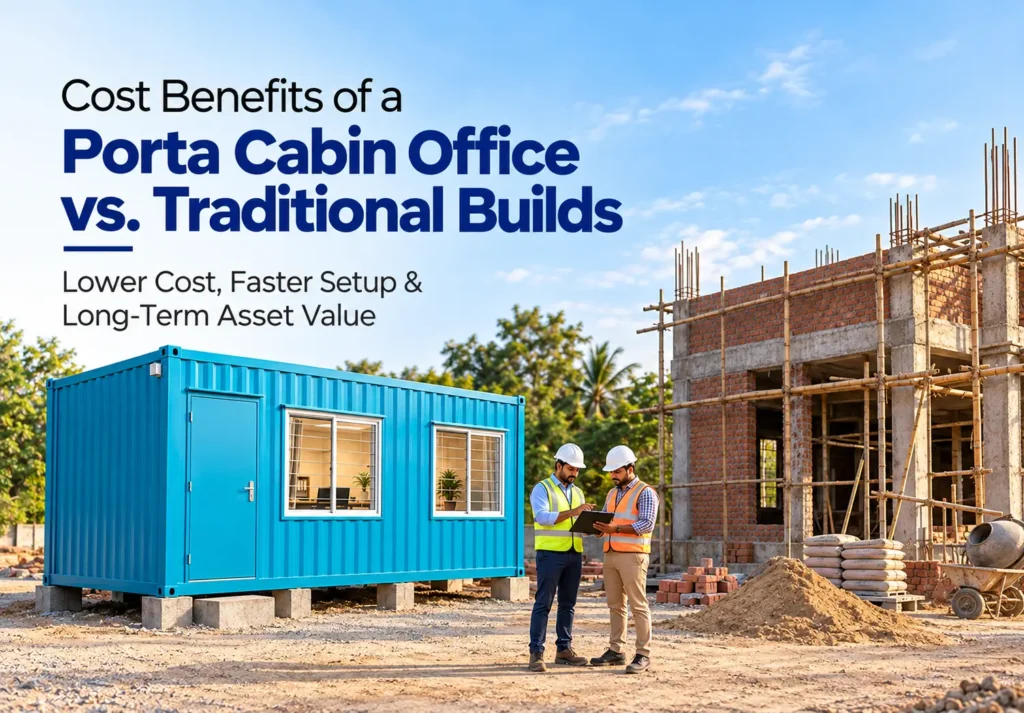
Portable Cabin vs Traditional Construction
Does this mean portable cabins should replace conventional buildings?
No.
Both have their place.
| Requirement | Portable Cabin | Traditional Construction |
|---|---|---|
| Fast deployment | Excellent | Moderate/Low |
| Relocation | Excellent | Low |
| Reuse | High | Low |
| Permanent building | Depends on system/use | Excellent |
| Complex architecture | Moderate/High | Excellent |
| Temporary office | Excellent | Often inefficient |
| Pop-up retail | Excellent | Often inefficient |
| Farm retreat | Excellent | Excellent |
| Rooftop pod | Possible, subject to approvals | Possible, subject to approvals |
| Large permanent development | Usually not the first choice | Often appropriate |
The smart approach is not to ask
“Which is better?”
but
“Which construction approach is appropriate for this requirement?”
What Should You Consider Before Buying a Portable Cabin?
Before choosing a cabin, start with the application.
Don’t begin with:
“What size cabin do you have?”
Begin with:
“What do I want the space to do?”
Then consider:
1. Purpose
Office? Café? Bedroom? Shop? Studio?
2. Size
How many people will use it?
3. Location
Ground level, rooftop, garden, farm, or commercial site?
4. Climate
Will it face heavy rain, heat, or humidity?
5. Insulation
What level of thermal comfort is required?
6. Electrical Requirements
Will you need:
- AC?
- Computers?
- Refrigeration?
- Cooking equipment?
- Heavy electrical appliances?
7. Plumbing
Does the application need the following?
- Toilet?
- Wash basin?
- Kitchen?
- Shower?
8. Transportation
Can the cabin reach the site?
9. Installation
What site preparation is required?
10. Future Use
Can the cabin be repurposed later?
This last question is particularly important.
A cabin designed with future flexibility in mind can potentially remain useful long after the original requirement disappears.
What About Rooftop Portable Cabins?
Rooftop applications are attractive, especially in cities where ground-level space is limited.
But this is an area where aesthetics should never come before engineering.
Before installing a cabin on a terrace, check:
- Structural load capacity
- Foundation/support arrangement
- Waterproofing
- Access
- Staircase/lift access
- Fire safety
- Electrical requirements
- Wind exposure
- Drainage
- Local building permissions
A lightweight cabin is not automatically safe for every rooftop.
The building must be evaluated by an appropriate structural professional, and all applicable approvals should be obtained.
Are Portable Cabins Eco-Friendly?
Portable cabins can support more resource-efficient construction practices in certain applications, particularly when they are designed for reuse and relocation.
Instead of:
Build → Use → Demolish → Dispose
below below the process outlined belowA reusable modular structure can potentially follow the below:
Build → Use → Dismantle → Relocate → Reuse
That can reduce the need to repeatedly build temporary structures.
However, no construction system is automatically sustainable.
Environmental performance depends on:
- Materials
- Manufacturing
- Transportation
- Energy use
- Insulation
- Maintenance
- Lifespan
- Reuse
- End-of-life disposal
The biggest sustainability advantage of a portable structure can therefore come from long-term reuse rather than simply calling it “prefabricated.”
The New Generation of Portable Spaces
The portable cabin industry is moving in an interesting direction.
Earlier:
Portable Cabin = Construction Site
Now:
Portable Cabin = Flexible Space
That change creates possibilities for:
- Businesses
- Developers
- Homeowners
- Hospitality operators
- Educational institutions
- Industrial companies
- Retail brands
- Event organizers
A single modular construction approach can support multiple industries.
And that is perhaps the most interesting thing about portable cabins.
They are not simply replacing temporary buildings.
They are changing the way we think about creating space.
Why PortaSpaze?
At PortaSpaze, the focus is on moving beyond the conventional idea of a portable cabin as a basic temporary structure.
The objective is to create functional, flexible, and better-designed spaces that can respond to different requirements.
That could mean:
A professional office today.
A café tomorrow.
A farmhouse retreat for another customer.
A rooftop studio for someone else.
The application changes.
The underlying idea remains the same:
Create the space you need without unnecessarily committing to conventional construction.
Whether the requirement is a construction-site office, farmhouse cabin, portable café, security cabin, accommodation unit, retail space, or a terrace pod, the design should start with the use case, not simply the dimensions of the cabin.
Frequently Asked Questions
What are the different uses of portable cabins?
Portable cabins can be used for offices, construction site offices, security cabins, cafés, retail shops, accommodation, farmhouses, home offices, studios, classrooms, sales offices, warehouse offices, and several other applications. (PortaSpaze)
Can a portable cabin be used as a home office?
Yes. A suitably designed and permitted cabin can provide a dedicated home office, studio, or workspace.
Can portable cabins be used as cafés?
Yes, subject to suitable design, plumbing, electrical requirements, food-safety regulations, and local permissions.
Can I use a portable cabin as a farmhouse room?
Yes. Portable cabins can be designed as bedrooms, guest rooms, or compact farmhouse retreats, depending on the site, design, and applicable regulations.
Can I put a portable cabin on my rooftop?
Potentially, but it should never be assumed to be permissible or structurally safe. The building’s structural capacity, waterproofing, access, fire safety, and applicable permissions should be assessed before installation.
Can a portable cabin be used as a shop?
Yes. Portable cabins can be configured as retail outlets, kiosks, and pop-up shops, subject to local commercial and planning requirements.
Are portable cabins only for temporary use?
No. “Portable” refers to the structure’s ability to be relocated or adapted. A cabin can potentially be used for extended periods depending on its design, maintenance, and applicable approvals.
Can a portable cabin be customized?
Yes. Depending on the manufacturer and construction system, size, layout, insulation, windows, doors, electrical systems, plumbing, interior, and exterior finishes can be customized.
Can one portable cabin be reused for another purpose?
Potentially, yes. A properly designed modular cabin can often be repurposed, although the feasibility depends on its original construction, utilities, and the new application.
Final Thoughts
The biggest mistake people make when thinking about portable cabins is limiting them to one use.
Construction site.
That’s only the beginning.
A portable cabin can become
An office.
A café.
A farmhouse retreat.
A rooftop studio.
A retail shop.
A security cabin.
A guest room.
A classroom.
A creative studio.
A sales office.
And potentially much more.
The real value isn’t simply that the structure can move.
It is that your space can adapt to your needs.
As businesses and homeowners increasingly look for faster, flexible, and more efficient ways to create usable space, portable and modular construction offers an alternative to building everything from scratch.
So instead of asking
“What is a portable cabin used for?”
Perhaps the better question is
“What space do I need—and does it really need to be built permanently?”
That is where the future of portable infrastructure gets interesting.
Looking for a space that can adapt to your needs?
From portable offices and site cabins to cafés, farmhouse retreats, retail spaces, and terrace pods, PortaSpaze helps turn modular structures into purposeful spaces.
Think beyond the cabin. Think flexible space.
Explore PortaSpaze.