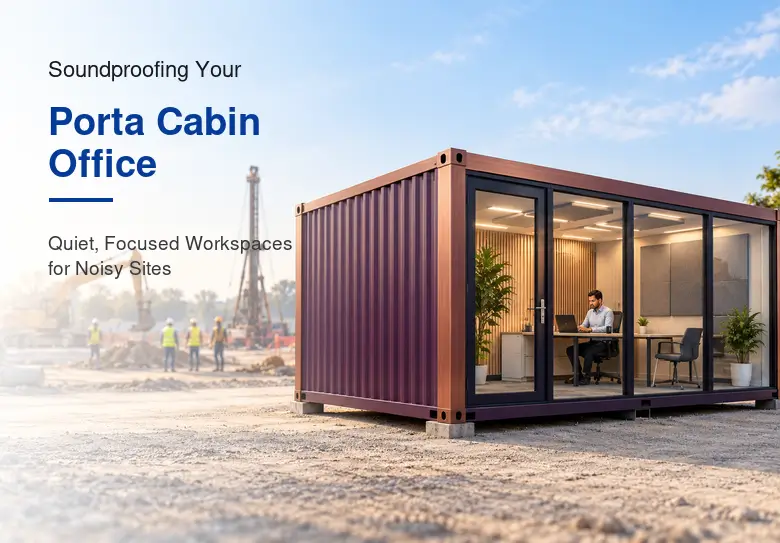
Introduction: Combating Industrial Noise on Active Project Sites
For project managers, site engineers, and B2B procurement teams spearheading heavy industrial operations across Eastern India, managing on-site noise pollution is a constant battle. Whether you are overseeing a highway expansion along the NH6 Corridor, a massive port development in Haldia, or a new manufacturing plant near Kolkata, the deafening roar of excavators, diesel generators, and heavy freight traffic can severely disrupt administrative workflow. To maintain engineering precision, conduct crucial client meetings, and ensure the mental well-being of your remote workforce, establishing a quiet, climate-controlled sanctuary is absolutely essential. Waiting months for a traditional brick-and-mortar building to be constructed amidst the chaos is no longer a financially viable option. The most strategic and immediate solution is to deploy an acoustically optimized porta cabin office.
By leveraging a heavily insulated, prefabricated workspace, your project administration can entirely bypass the unpredictable delays and noise-related disruptions of civil construction. Your team can plug in and begin executing complex technical operations immediately in a professional, secure environment. However, successfully mitigating heavy industrial noise requires precise engineering, strategic material selection, and intelligent interior layouts. This comprehensive guide explores the technical methodologies and structural specifications required to effectively soundproof your modular workspace, ensuring peak productivity on the most demanding sites.
Core Topic Deep-Dive: Strategies for Soundproofing Your porta cabin office
Acoustic management in a highly active industrial zone requires addressing two primary forms of noise pollution: airborne sound (such as human shouting, sirens, and highway traffic) and structure-borne sound (the low-frequency vibrations generated by drilling, heavy machinery, and passing freight trucks). Designing an effective Modular Office Cabin involves creating a multi-layered barrier that tackles both frequency types without compromising the rapid-deployment benefits of the structure.
Understanding the Acoustic Envelope
The foundation of soundproofing lies in establishing a tight, monolithic acoustic envelope. Sound acts much like water; it will find and penetrate the weakest points of a structure, such as poorly sealed window frames, uncaulked door hinges, or thin wall panels. To achieve a high Sound Transmission Class (STC) rating, the structural shell must possess adequate mass to reflect external noise and dense internal insulation to absorb penetrating sound waves. When engineering a workspace for a high-decibel environment, procurement teams must ensure that the manufacturer prioritizes continuous seam welding and premium weather-stripping to eliminate acoustic leaks.
Strategic Zoning and Interior Layout Planning
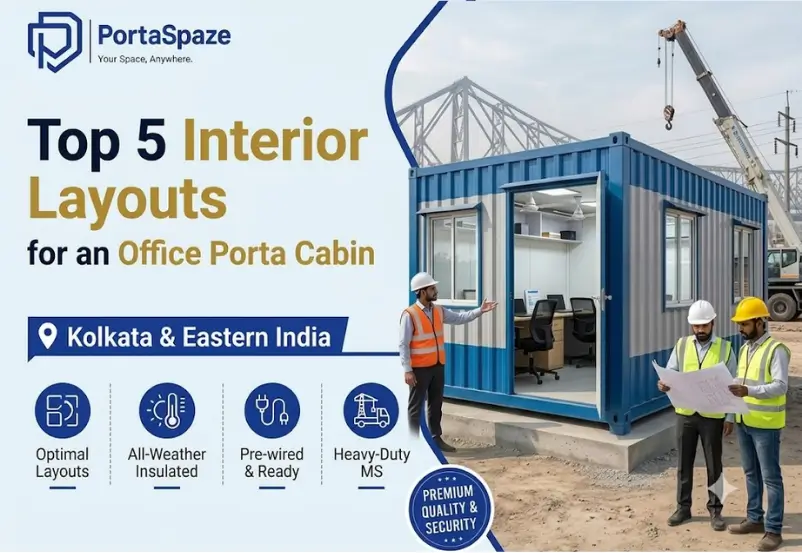
Beyond the physical materials of the cabin, the interior floor plan plays a massive role in acoustic defense. Project managers should design the layout so that non-essential or transient spaces act as physical sound buffers. For example, by placing storage closets, server racks, and enclosed pantry areas along the wall that faces the primary noise source (such as the active construction pit or the highway), you create an additional layer of mass that external sound must penetrate before reaching the primary workspaces. Furthermore, acoustic partition panels can be integrated internally to separate open-plan engineering desks from private executive suites, ensuring that interior conversations and phone calls remain completely confidential.
Key Features & Materials: Engineered for Acoustic and Structural Defense
A true heavy-duty Portable Office Container must be capable of withstanding punishing coastal monsoons, extreme summer heat, and the constant physical vibrations of nearby heavy industrial machinery. The precision engineering and premium materials utilized in manufacturing dictate whether a cabin acts as a flimsy acoustic echo chamber or a highly insulated, quiet corporate asset.
Uncompromising MS Steel Mass and Durability
Mass is the first line of defense against low-frequency industrial noise. The structural shell of a premium modular unit relies on fully continuous-welded 1.2 mm thick corrugated Mild Steel (M.S.) exterior sheets. This rigorous engineering standard ensures a rigid, weather-tight, and highly massive monolithic box that reflects a significant portion of exterior sound waves. To combat the corrosive environments found in Eastern India, every inch of this steel frame undergoes a rigorous anti-rust treatment, featuring an industrial Red Oxide primer followed by two thick coats of premium weather-grade Synthetic Enamel paint.
Advanced Thermal and Acoustic Insulation Cores
An uninsulated steel structure will not only amplify external noise but also become uninhabitable during a tropical summer. To ensure maximum climate-controlled comfort and acoustic dampening, high-grade cabins are lined with a dense insulation core, typically 25 mm to 50 mm thick Glasswool or high-density Polyurethane Foam (PUF). This robust thermal and acoustic barrier absorbs airborne sound frequencies, keeping the interior quiet while drastically reducing air conditioning power consumption. This insulation is backed by 9 mm Particle Board or 4 mm Aluminium Composite Panel (ACP) wall cladding, which acts as a secondary rigid barrier to further block out the deafening noise of highway traffic.
Vibration-Damping Industrial Flooring
Structure-borne noise travels through the ground and up into the base of the cabin. To mitigate this, the foundation must absorb and dissipate kinetic energy. Our units utilize a rigid 18 mm heavy-duty Cement Fiber Board or marine-grade plywood base. This dense sub-floor is topped with a 1 mm to 1.5 mm thick, wear-resistant, and anti-skid PVC Vinyl mat. This layered flooring system prevents the floor from acting like a drumhead, ensuring that heavy boots and exterior ground vibrations do not translate into distracting internal noise.
Acoustically Sealed Windows and Doors
Windows are traditionally the weakest acoustic link in any building. To maintain a quiet environment without sacrificing essential natural light, premium cabins are fitted with precisely engineered Aluminium sliding windows. These units feature thick, vibration-resistant glass, integrated safety grills, and heavy-duty rubber weather-stripping to ensure an airtight seal when closed. Similarly, the main corrugated M.S. sheet doors are equipped with heavy hatch bolts and seals to prevent sound flanking along the doorframe.
Strategic Comparisons: Modular Solutions vs. Traditional Civil Construction
When B2B procurement teams and site managers evaluate site infrastructure investments, the comparison between modular workspaces and traditional civil construction heavily favors the modern prefabricated approach, especially concerning deployment speed, cost, and immediate acoustic relief.
Deployment Speed and Immediate Noise Relief
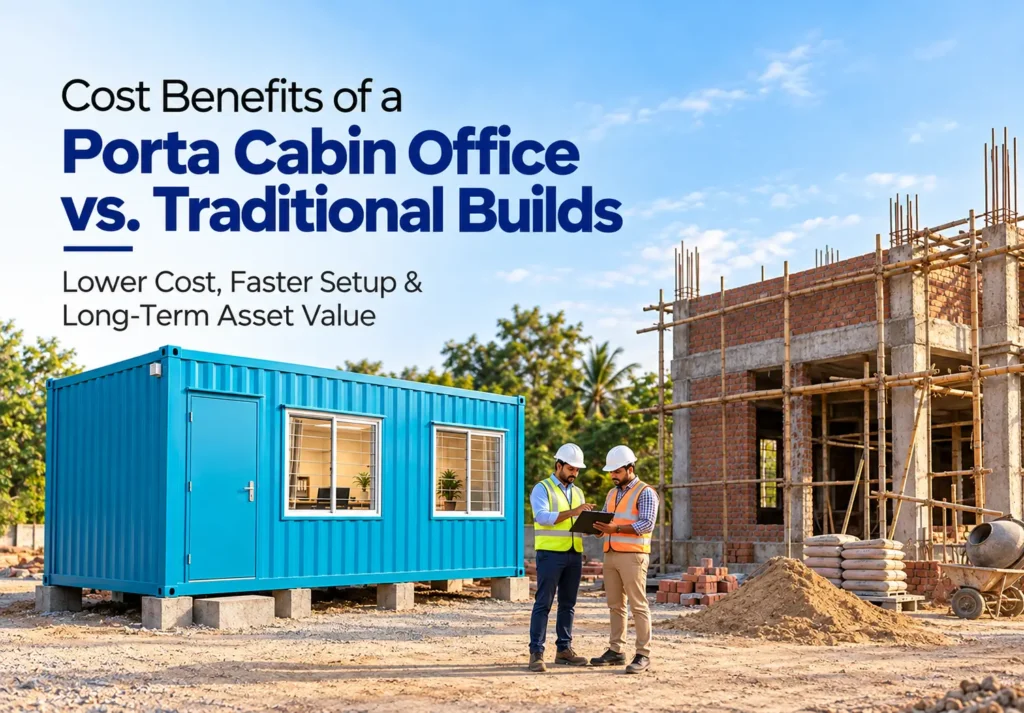
Traditional brick-and-mortar buildings require municipal permits, deep foundation excavation, prolonged material curing times, and unpredictable local labor schedules. During the months it takes to construct a civil office, your administrative team is exposed to the elements and the relentless noise of the site. A modular unit is manufactured off-site in a highly controlled factory environment and delivered entirely complete. You bypass months of costly delays and provide your team with an instantly soundproofed, climate-controlled sanctuary in a matter of days.
Capital Preservation and Unmatched Mobility
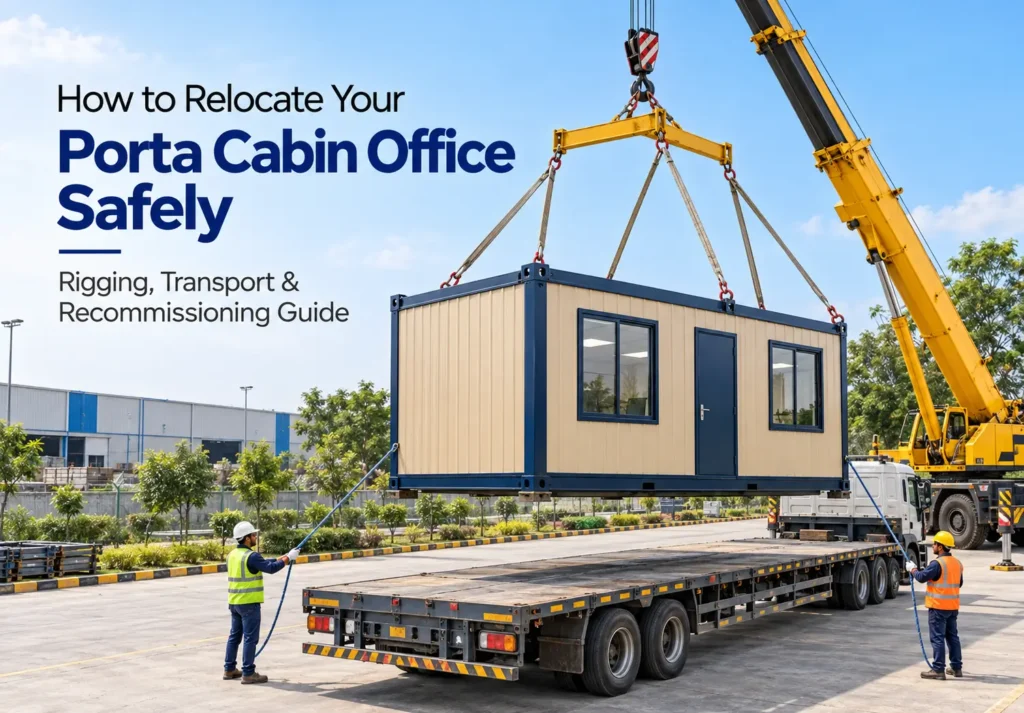
A concrete building must be demolished at the end of a project, resulting in a total loss of structural capital and generating massive amounts of environmental waste. Conversely, a modular cabin features integrated heavy-duty corner castings and top rigging lifting lugs. This allows the unit to be safely hoisted by a standard crane onto a flatbed trailer and transported directly to your next noisy project site without any structural degradation. You purchase the asset once and leverage its utility across multiple project lifecycles, guaranteeing a superior Return on Investment (ROI).
Predictable Budgeting and Fixed Costs
Civil construction is plagued by hidden costs, weather-delayed labor charges, and wildly fluctuating raw material prices. Modular manufacturing provides procurement teams with a fixed, transparent, upfront price point. There are no hidden fees or surprise material costs, making corporate budget approvals seamless and highly predictable.
Frequently Asked Questions (FAQ)
What materials provide the best soundproofing in a porta cabin office?
The most effective acoustic defense relies on a combination of mass and absorption. The 1.2 mm corrugated Mild Steel exterior provides the necessary mass to block low-frequency vibrations, while a high-density 25 mm Glasswool or PUF insulation core absorbs mid-to-high frequency airborne noises. Pairing these with Aluminium Composite Panel (ACP) interior cladding creates a highly effective, multi-layered acoustic envelope.
How do sliding windows affect the acoustic performance of a Readymade Cabin?
Standard windows can let in significant noise if not properly engineered. We utilize premium powder-coated aluminium sliding windows fitted with thick glass and heavy-duty rubber weather seals. When fully closed and locked, these seals compress to eliminate air gaps, drastically reducing the transmission of exterior industrial noise while still allowing ample natural light into the workspace.
Can the interior layout be customized to further reduce noise?
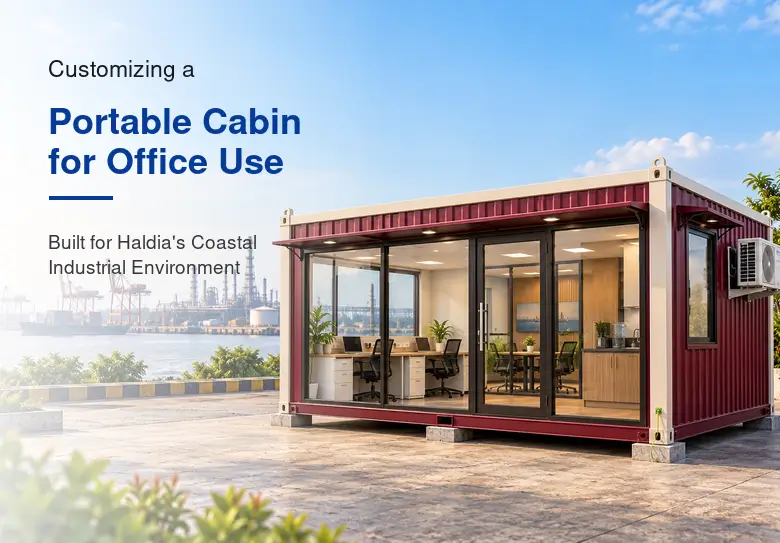
Yes. The open-span structural design of our modular units means that internal acoustic partitions can be easily integrated. You can create heavily soundproofed private executive suites for project managers or dedicate specific buffer zones—like pantries or server rooms—on the side of the cabin facing the loudest site machinery to further insulate the main engineering workstations.
Are soundproofed modular units suitable for the extreme weather in Kolkata?
Absolutely. The same dense Glasswool and PUF insulation that provides acoustic dampening also acts as a formidable thermal barrier. Combined with our heavy-duty Red Oxide anti-corrosion treatments and continuous seam welding, these cabins are specifically engineered to withstand the punishing monsoons, high humidity, and extreme summer heat typical of Kolkata and Eastern India.
Why Choose PortaSpaze for Your Site Infrastructure
Do not let the chaotic noise and slow timelines of civil construction dictate your project’s success, drain your preliminary capital expenditure, or delay your engineering team’s critical work. As a premier manufacturer in Eastern India, PortaSpaze goes far beyond basic steel fabrication. We engineer rugged, heavily insulated, and acoustically optimized modular workspaces tailored precisely to your operational dimensions, structural workflows, and corporate aesthetic standards.
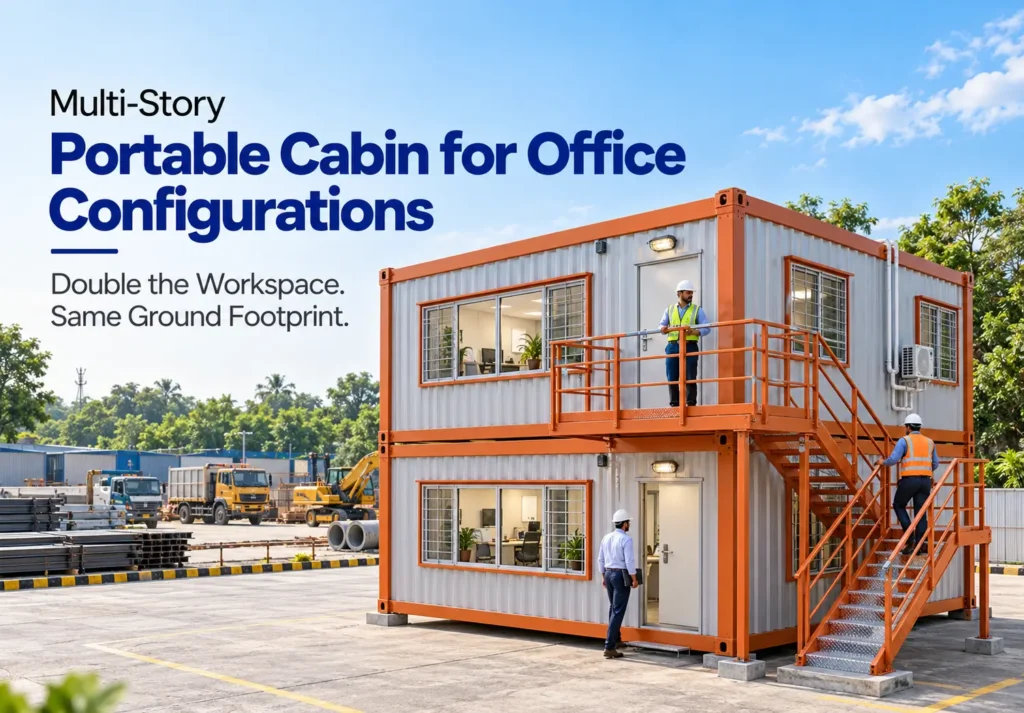
Whether you require a compact, soundproofed quality-control booth in Dankuni, a sprawling 40-foot multi-desk command center along the NH6 Corridor, or a multi-story administrative complex in Haldia, our specialized team delivers turnkey reliability that survives the harshest, loudest industrial environments. Upgrade your site infrastructure today, ensure your project administration is fully supported and focused from day one, and secure a long-term physical asset that moves seamlessly with your business. Contact PortaSpaze today to speak directly with an engineering specialist and request a comprehensive custom quote for your next heavy-duty deployment.