Introduction: The Environmental Mandate in Modern Infrastructure
As industrial expansion accelerates across Eastern India—stretching from the manufacturing hubs along the NH6 Corridor to the heavy port operations in Haldia—project managers and B2B procurement teams face a growing mandate: reducing the environmental impact of their operations. Traditional brick-and-mortar site infrastructure is notoriously harmful to the local ecosystem, generating massive amounts of non-recyclable debris, topsoil disruption, and airborne dust pollution[cite: 21, 23]. For modern engineering firms and civil contractors aiming to meet stringent corporate sustainability goals without compromising on operational efficiency, the traditional construction model is no longer viable. The strategic, eco-conscious alternative is to deploy a prefabricated portable cabin for office operations.
By transitioning your site administration into a modular workspace, your enterprise immediately minimizes its carbon footprint while enjoying the compounding benefits of rapid deployment[cite: 23]. These heavy-duty steel structures entirely eliminate the need for deep foundation excavation and the messy, water-intensive curing processes associated with concrete[cite: 21, 23]. Instead, your engineering team receives a highly professional, climate-controlled command center that leaves virtually zero trace on the environment once the project concludes[cite: 21]. This comprehensive guide explores the advanced eco-friendly features, sustainable materials, and long-term environmental benefits of integrating modular infrastructure into your next major project in Kolkata or beyond.
Core Topic Deep-Dive: Sustainable Engineering in a portable cabin for office
Understanding the sustainability of a Modular Office Cabin requires looking beyond just the finished product; the eco-friendly benefits begin at the very start of the manufacturing process and extend throughout the entire lifecycle of the asset.
Off-Site Manufacturing Reduces Site Pollution
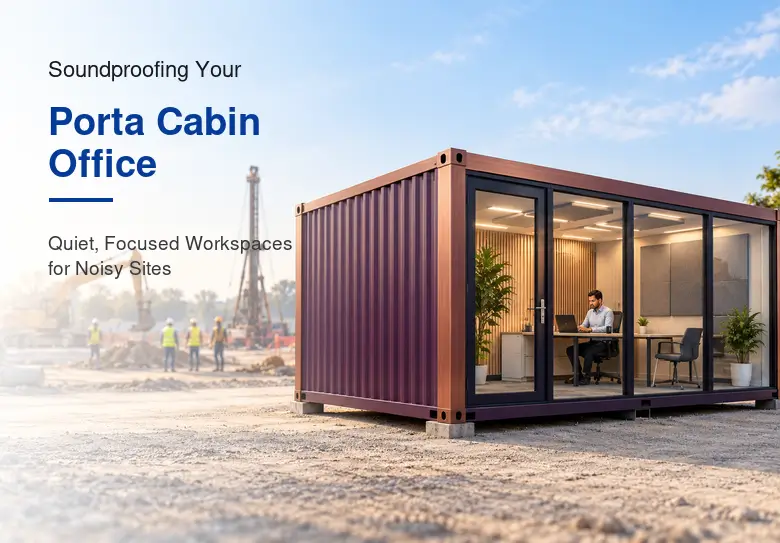
Unlike conventional building methods that turn your project site into a chaotic, dust-filled zone, a Readymade Cabin is manufactured off-site in a highly controlled factory environment[cite: 21]. This precision engineering minimizes raw material wastage, prevents toxic runoff into local soil, and drastically reduces the noise pollution that typically plagues the surrounding community during early site setup phases[cite: 21]. When the unit is finally delivered to your site, it simply requires a leveled ground or basic concrete pedestals for installation, protecting the local topsoil and natural drainage systems[cite: 22].
Energy-Efficient Interior Layouts
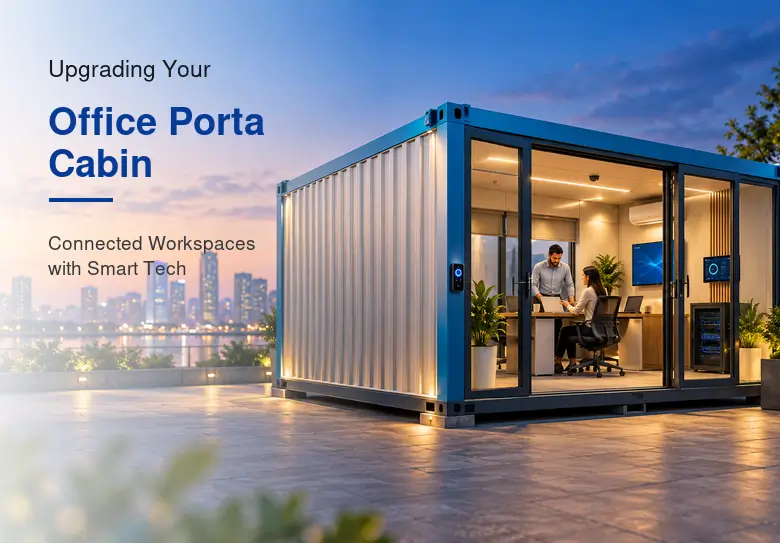
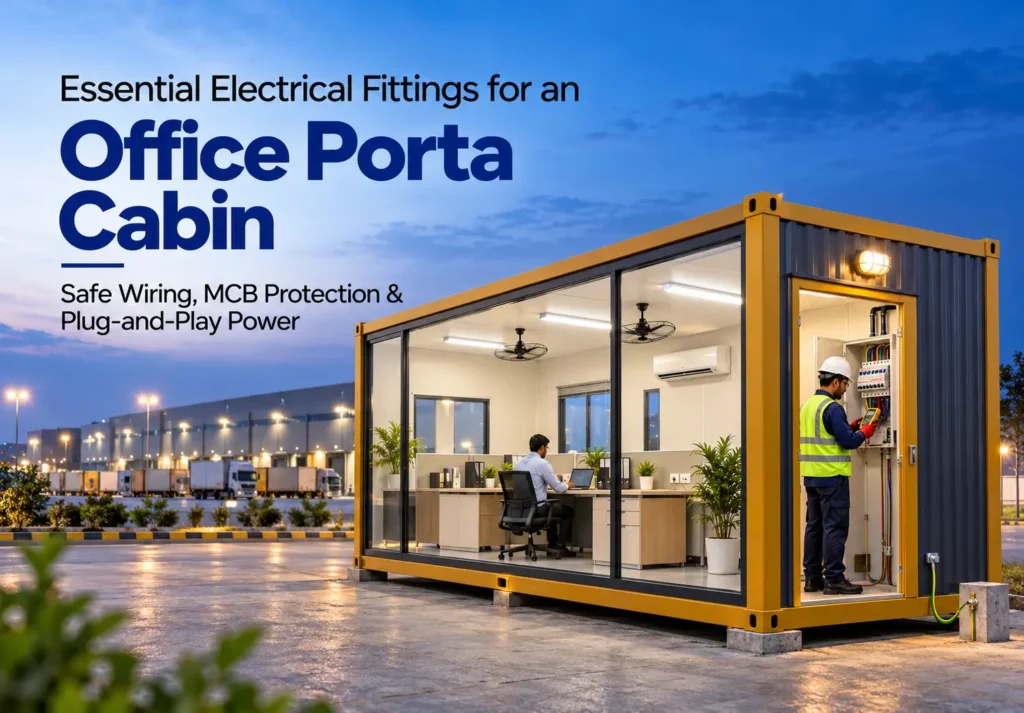
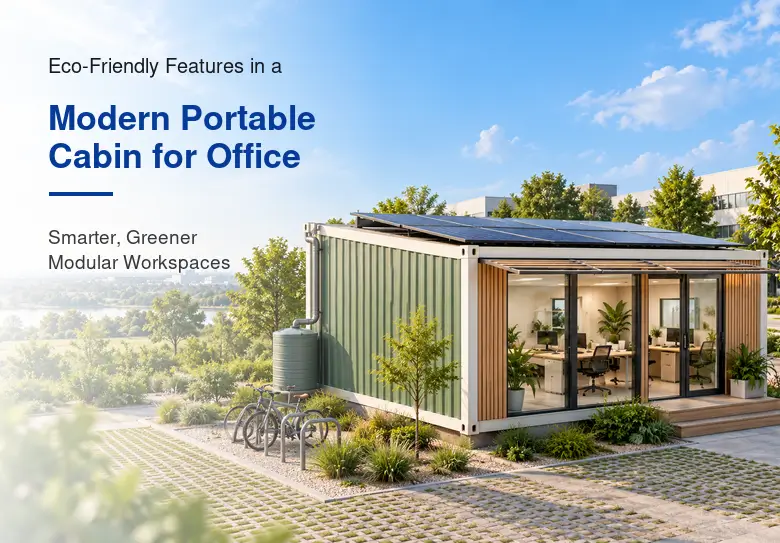
Modern modular workspaces are designed with passive energy conservation in mind. By incorporating large, strategically placed aluminium sliding glass windows, these units maximize natural daylight, significantly reducing the need for artificial lighting during standard working hours[cite: 24, 25]. When artificial lighting is required, the factory-fitted electrical layouts utilize highly efficient flush-mounted LED panel lights and LED tubes, which consume minimal electricity and generate zero heat compared to traditional incandescent or halogen bulbs[cite: 21, 22].
100% Asset Reusability and Circular Economy
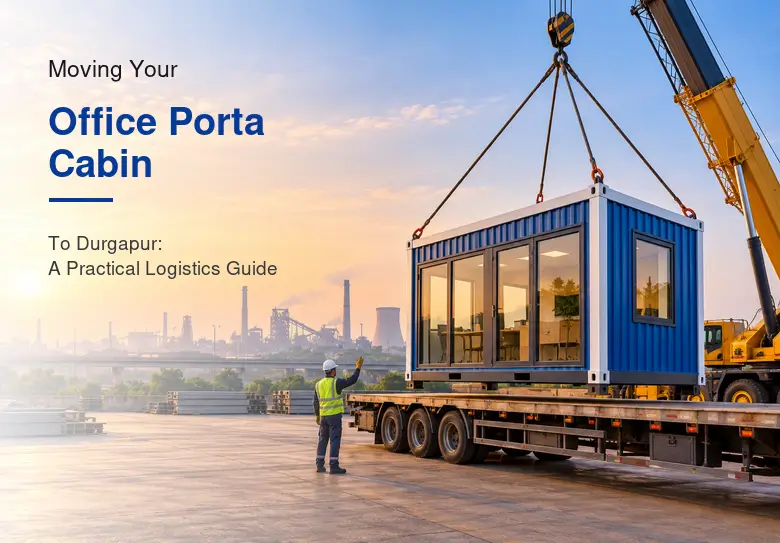
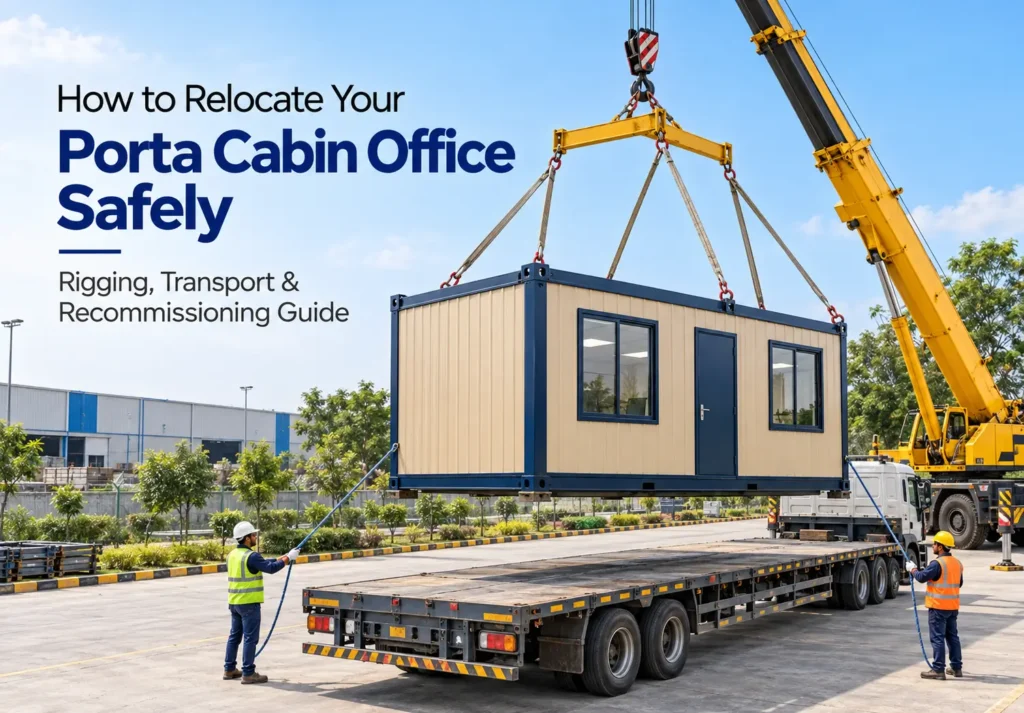
The most profound eco-friendly feature of a Portable Office Container is its infinite reusability. When a two-year infrastructure project concludes, traditional concrete buildings are demolished, sending tons of crushed cement and brick directly to overcrowded landfills[cite: 21]. A modular unit, engineered with heavy-duty corner castings and top lifting lugs, is simply hoisted by a crane onto a flatbed trailer and transported to your next project site in Durgapur, Uluberia, or Jamshedpur[cite: 21, 22]. You are investing in a sustainable circular economy where the structural asset serves your business across multiple lifecycles, completely eliminating the cycle of demolition and rebuilding.
Key Features & Materials: Green Durability and Efficiency
To achieve true sustainability, a building must be durable enough to withstand the harshest elements without requiring constant repairs or replacement materials. PortaSpaze utilizes premium, heavy-duty materials that guarantee decades of eco-friendly utility.
Recyclable Mild Steel (M.S.) Structural Integrity
Steel is one of the most recycled materials on the planet. The foundation of our modular units relies on a heavy-duty framework of Square Hollow Sections (SHS) paired with fully continuous-welded 1.2 mm thick corrugated Mild Steel exterior sheets[cite: 21, 22]. This creates a rigid, monolithic shell that can survive punishing coastal monsoons and high winds[cite: 23]. At the eventual end of its 15 to 20-year lifespan, the vast majority of this steel superstructure can be melted down and completely recycled, preventing industrial waste[cite: 22, 23].
Advanced Thermal Insulation for HVAC Efficiency
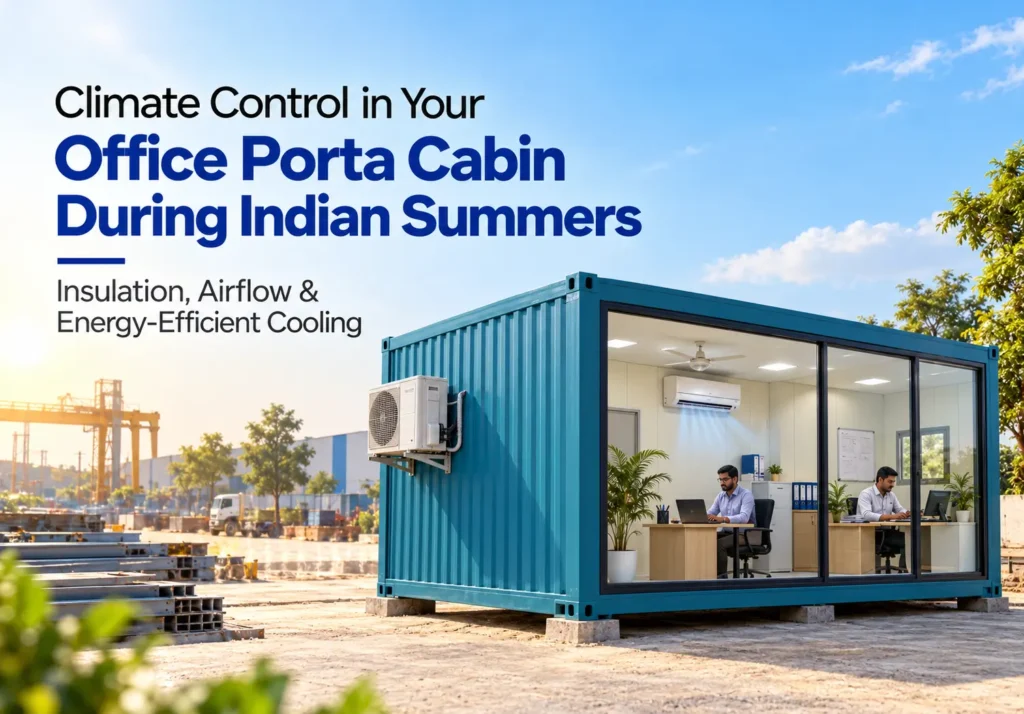
Operating an uninsulated steel building during an Indian summer forces air conditioning units into constant overdrive, causing massive spikes in energy consumption and greenhouse gas emissions[cite: 21]. To combat this, our eco-friendly cabins are lined with a high-density 25 mm thick Glasswool or Polyurethane Foam (PUF) insulation core[cite: 21, 22]. This robust thermal envelope traps cooled air inside during the summer and retains warmth during the winter[cite: 21, 23]. By optimizing thermal efficiency, your project drastically lowers its daily power consumption, saving on electricity costs while protecting the environment.
Non-Toxic Anti-Corrosion Treatments
To prevent the need for frequent, wasteful repainting and structural patching, every inch of the steel frame undergoes an intensive dual-layer anti-rust treatment[cite: 21, 22]. This includes the application of an industrial Red Oxide primer and premium weather-grade Synthetic Enamel paints (such as Feroza Blue)[cite: 21, 22]. This superior weatherproofing process ensures the unit remains rust-free and structurally sound in humid environments, extending the asset’s lifespan and reducing maintenance-related chemical waste.
Strategic Comparisons: Modular Solutions vs. Traditional Civil Construction
When B2B procurement teams evaluate site infrastructure, the comparison between modular buildings and traditional civil construction clearly highlights the environmental and financial superiority of the prefabricated approach.
Zero Civil Disruption and Site Waste
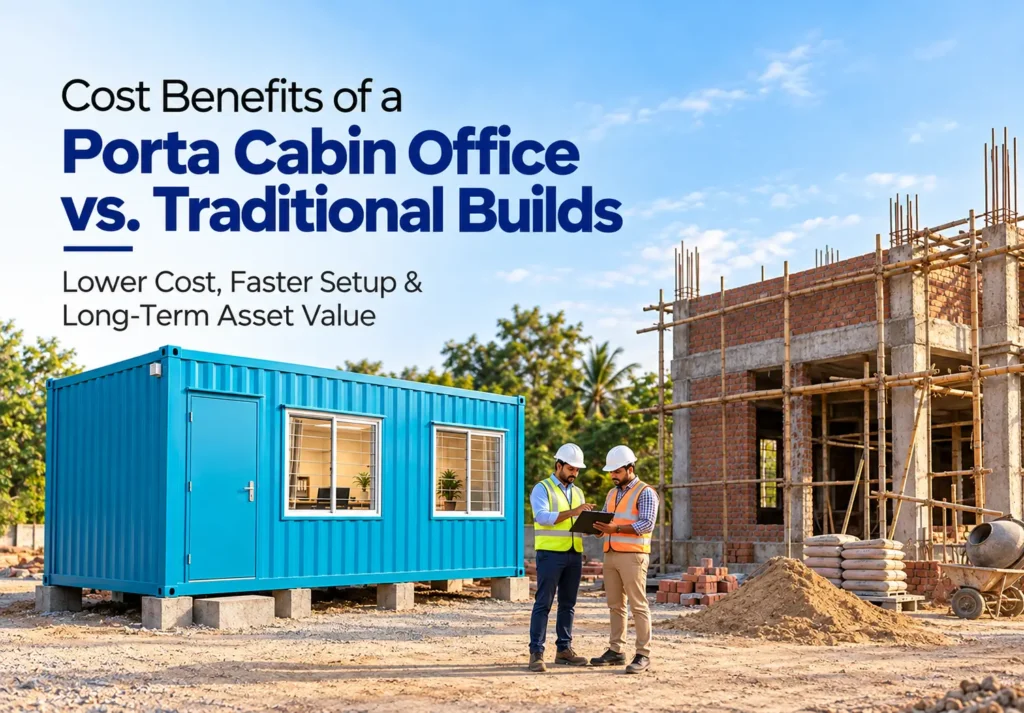
Civil construction is inherently destructive to the immediate environment. It requires deep earth excavation, constant mixing of cement, and leaves behind non-recyclable debris such as broken bricks and hardened mortar[cite: 21, 23]. Prefabricated modular construction generates up to 90% less site waste[cite: 21, 23]. Because all primary fabrication occurs off-site, you actively reduce your project’s carbon footprint and eliminate post-project landscaping and cleanup costs[cite: 21, 23].
Deployment Speed and Energy Conservation
A traditional build requires months of heavy machinery operations on-site—excavators, cement mixers, and diesel generators—all burning fossil fuels daily[cite: 21, 24]. A modular workspace bypasses this entirely[cite: 21]. Delivered 100% complete and ready for plug-and-play occupancy, the installation process requires only a few hours of crane operation[cite: 21]. What takes months of continuous energy burn to build conventionally takes only days to deploy modularly, ensuring immediate operational readiness and massive energy savings[cite: 21, 24].
Capital Preservation and ROI
From a financial perspective, sustainable practices equal profitable practices. A concrete building must be abandoned when a lease ends or a project concludes, resulting in a total loss of the structural investment[cite: 21]. In stark contrast, an eco-friendly modular cabin can be relocated infinitely[cite: 21, 23]. Because it is classified as a movable asset, it often qualifies for highly favorable tax depreciation rates, significantly lowering long-term capital expenditure while freeing up cash flow for your core business operations[cite: 21].
Frequently Asked Questions (FAQ)
How does insulation make a portable cabin for office use more eco-friendly?
The 25 mm Glasswool or PUF insulation acts as a highly effective thermal barrier, keeping the interior climate stable despite extreme external temperatures[cite: 22, 23]. This means your split air conditioning units and heaters do not have to work as hard or run continuously, which drastically cuts down on the electrical power consumed by your site infrastructure on a daily basis[cite: 21, 23].
Are the materials used in a Modular Office Cabin recyclable?
Yes. The primary structural component of our cabins is heavy-duty corrugated Mild Steel (M.S.)[cite: 21, 22]. Steel is highly recyclable, meaning that at the end of the cabin’s 15 to 20-year structural lifespan, the metal can be fully repurposed rather than ending up in a landfill, making it a highly sustainable building material[cite: 22, 23].
Do these cabins require environmentally damaging foundations?
No. Unlike traditional buildings that require deep, disruptive concrete footings that permanently alter the topsoil, our modular units only require a simple, level surface[cite: 21]. They can be safely seated on basic concrete pedestal blocks or a flat plinth, leaving the natural ground largely undisturbed and easy to restore once the cabin is relocated[cite: 21, 25].
How does off-site manufacturing benefit the local site environment in Kolkata?
By shifting the construction process to a controlled factory floor, you eliminate the noise pollution, airborne cement dust, and toxic material runoff that typically harm the local environment and surrounding communities during a traditional on-site build[cite: 24, 25]. The site remains clean, quiet, and focused entirely on your primary engineering project.
Why Choose PortaSpaze for Your Sustainable Project
Do not let outdated, environmentally harmful, and expensive civil construction methods drain your project’s budget and violate your corporate sustainability goals. As a premier manufacturer in Eastern India, PortaSpaze goes far beyond basic steel fabrication. We engineer rugged, heavily insulated, and highly professional eco-friendly workspaces tailored precisely to your B2B operational dimensions and aesthetic standards[cite: 21, 23].
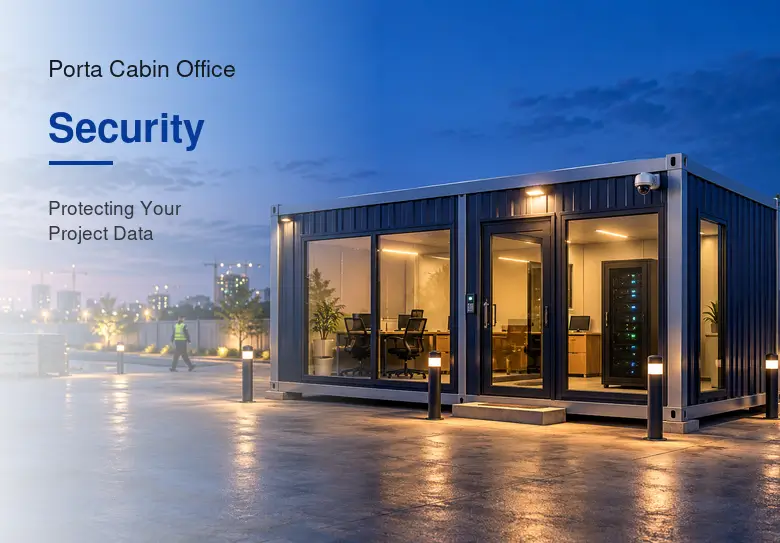
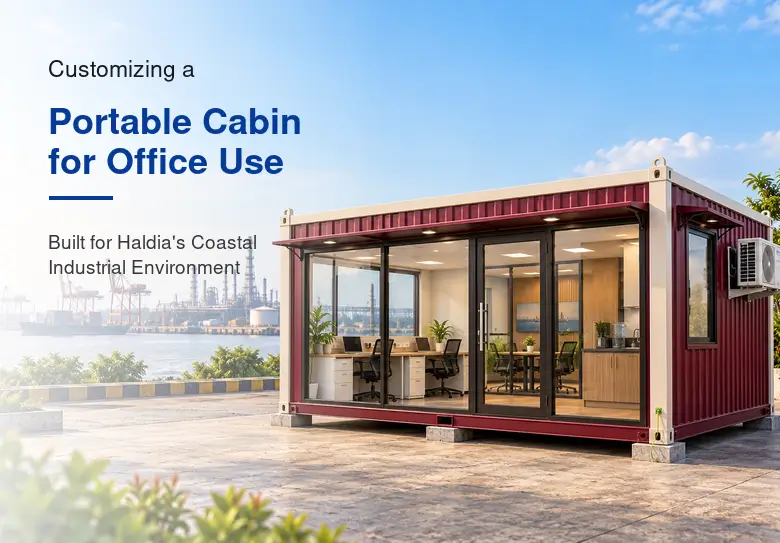
Whether you require a compact, energy-efficient security booth for a logistics park in Dhulagarh, a sprawling multi-desk engineering command center in Haldia, or a fully customized executive suite on the NH6 Corridor, our specialized team delivers turnkey reliability that survives the harshest industrial environments while protecting the ecosystem[cite: 21, 23]. Upgrade your site infrastructure today, ensure your project administration is fully supported from day one, and secure a long-term, sustainable physical asset that preserves your capital. Contact PortaSpaze today to request a comprehensive custom quote for your next green modular deployment.